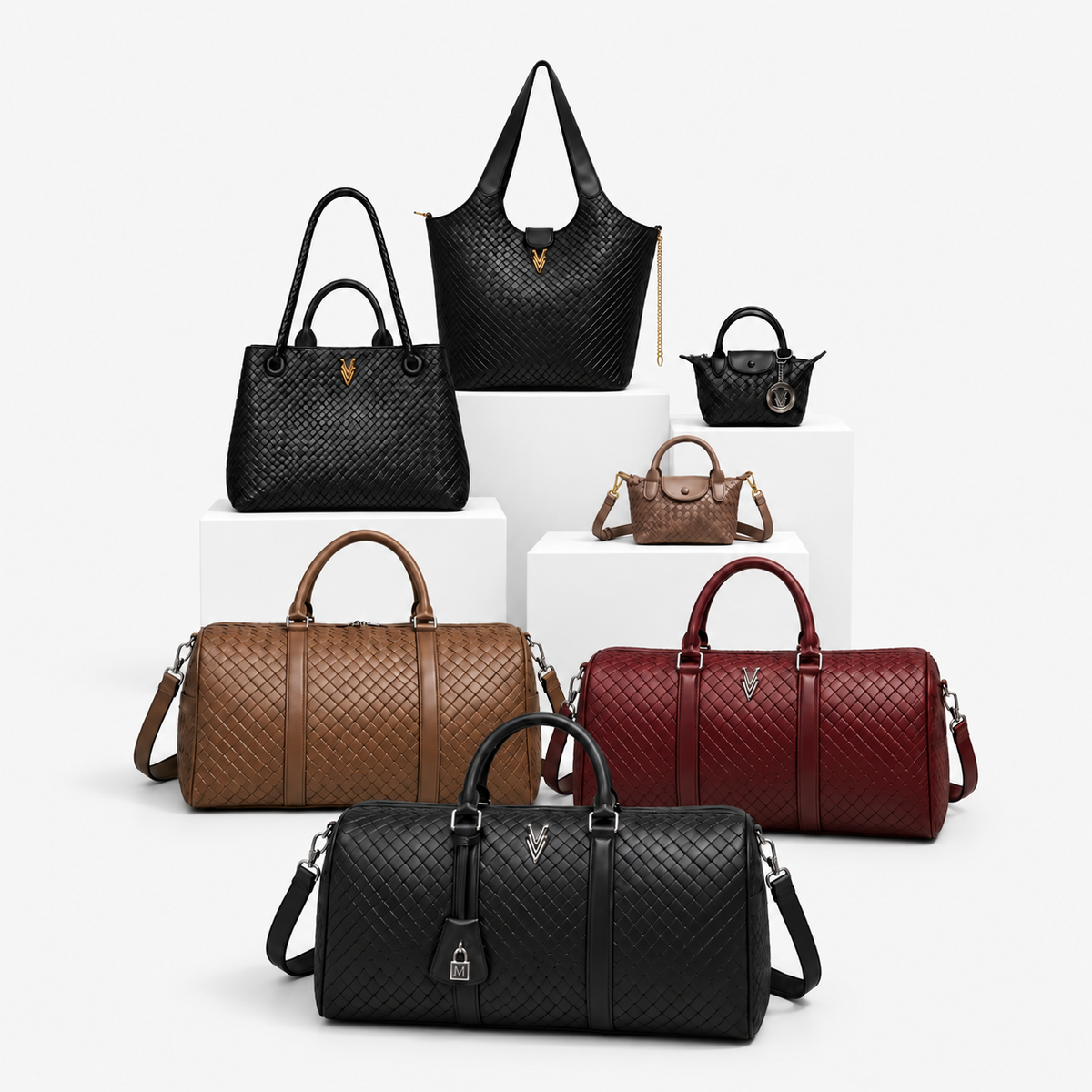
Article: Duffle Bag vs Weekender: Which Fits Your Trip?
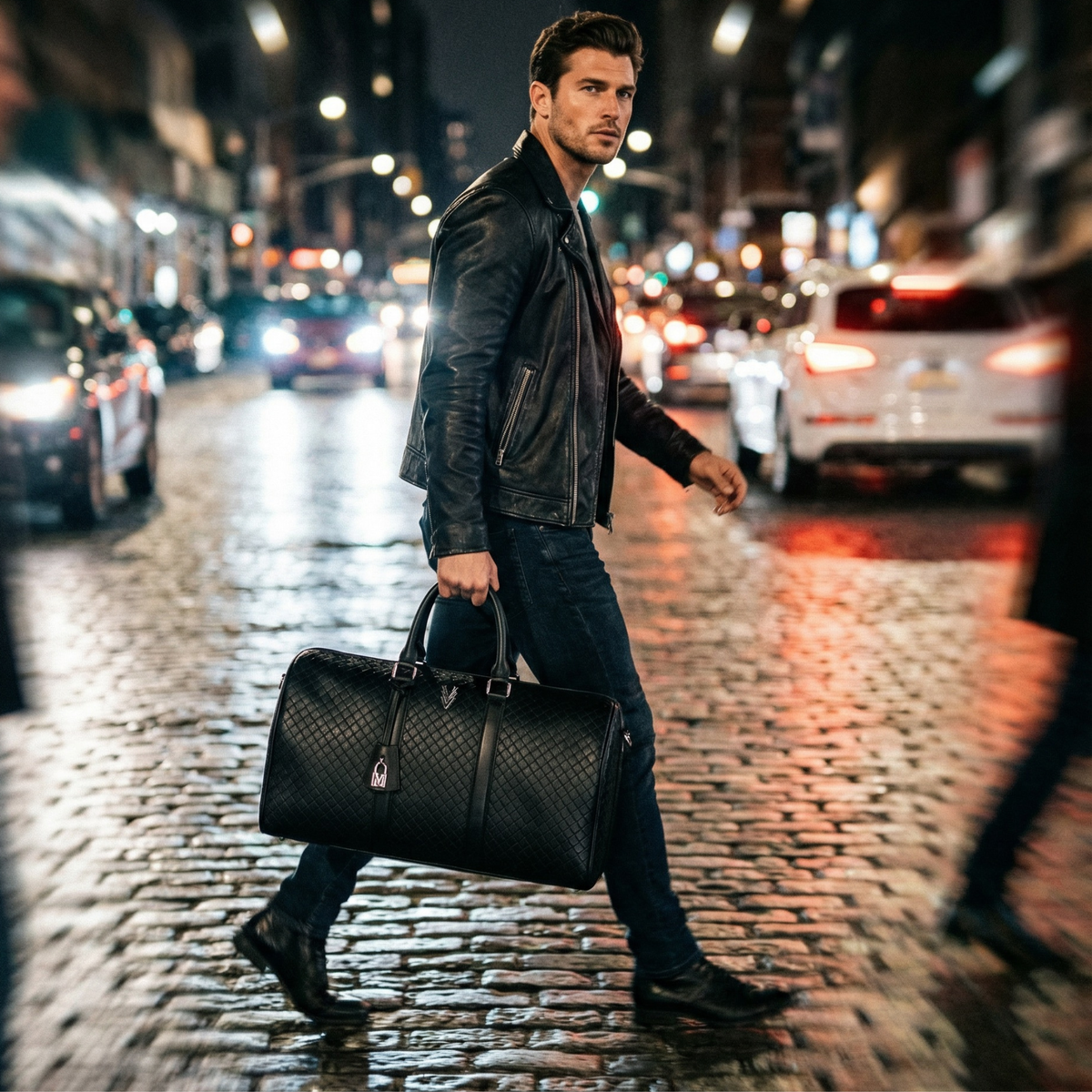
Duffle Bag vs Weekender: Which Fits Your Trip?
A two-night escape can expose every weakness in a travel bag. Overpack a soft duffle and it can lose its shape at your feet. Choose a bag that is too structured, and fitting in an extra sweater or a pair of sneakers becomes an exercise in restraint. The duffle bag vs weekender decision is less about choosing a better bag and more about choosing the silhouette that works with the way you move.
For style-conscious travelers, that difference matters. A travel bag is often the first accessory people notice at the airport, in a hotel lobby, or on the way to a last-minute dinner. It should carry enough, look considered, and feel appropriate wherever the weekend leads.
Duffle Bag vs Weekender: The Essential Difference
A duffle bag is defined by flexibility. Traditionally cylindrical or softly rectangular, it has a spacious main compartment, top handles, and often a removable shoulder strap. Its character is relaxed and adaptable, making it a natural choice for gym sessions, overnight plans, road trips, and travel that calls for packing options rather than packing rules.
A weekender is designed around a specific purpose: carrying the essentials for a short trip with a more refined profile. It is usually wider and more structured than a classic duffle, with a flatter base, a defined opening, and interior pockets that keep smaller items from disappearing beneath clothing. Think of it as an elevated short-stay bag rather than a purely athletic carryall.
The categories do overlap. Many contemporary travel bags combine the generous capacity of a duffle with the clean lines and organization of a weekender. Still, the distinction is useful when you are deciding whether you value flexible volume or a more composed shape.
Choose a Duffle When Flexibility Comes First
A duffle works best when the contents of your bag change from one use to the next. One weekend, it may hold running shoes, a change of clothes, and a water bottle. The next, it may carry denim, knitwear, toiletries, and a book for a quick drive out of town. Its unstructured interior gives you room to adjust without forcing every item into a designated space.
This makes a duffle especially practical for travelers who tend to pack bulky or irregular items. Shoes, a folded jacket, workout gear, or a larger toiletry case can sit comfortably in a generous main compartment. A soft-sided silhouette also has some give when placed beneath an airline seat or in a packed car trunk.
There is a visual trade-off. A very slouchy duffle can appear casual, particularly once it is full. That is not a drawback for every trip, but it may not suit a polished work offsite, a city hotel arrival, or a dinner-forward itinerary. The most versatile duffles balance relaxed capacity with thoughtful details: a firm base, clean hardware, a structured handle drop, and a material that holds its finish.
A premium vegan leather duffle offers a particularly considered version of this shape. It brings depth, texture, and a more elevated appearance to a bag that is often associated with sport. Look for a durable lining and reinforced handles, since these areas take the greatest strain when the bag is packed for a full weekend.
A Duffle Is Best For
A duffle is a strong choice for flexible packing, casual overnights, gym-to-weekend routines, and road trips where space is less restricted. It also suits anyone who prefers one generous compartment over multiple smaller ones.
Choose a Weekender When Shape and Organization Matter
The weekender is for the traveler who likes a plan, even when the trip is spontaneous. Its more defined construction helps clothes remain folded, keeps the bag upright while packing, and creates a neater overall presence. It is a practical companion for a 48-hour itinerary that includes more than one setting: travel, a daytime appointment, an evening reservation, and a return home.
Because a weekender usually has a wider opening and more intentional internal layout, it is easier to see what you packed. This can be a small luxury when checking out early or changing between meetings. Dedicated pockets for a phone, keys, cards, and charging cable prevent the main compartment from becoming a search party.
The more tailored silhouette also makes a weekender especially fitting for business travel. Paired with a blazer, a long coat, or clean minimal separates, it reads as deliberate rather than purely utilitarian. A neutral vegan leather finish in black, espresso, taupe, or a warm cognac-inspired tone can complement a wardrobe without competing with it.
Its limitation is that structure asks for discipline. A weekender may be less forgiving if you routinely pack oversized footwear, multiple outerwear pieces, or souvenirs on the return trip. For those travelers, sizing up slightly or choosing a weekender with expandable sides can preserve the polished look without sacrificing usable capacity.
A Weekender Is Best For
Choose a weekender for overnight business travel, planned two- or three-day stays, polished city breaks, and occasions when your bag will move directly from transit to a more formal setting.
Consider the Way You Actually Pack
Capacity numbers can be helpful, but packing habits tell a clearer story. If you travel with one pair of shoes, a compact toiletry bag, and a small wardrobe edit, a medium weekender may be all you need. If you always bring a second pair of shoes, a hair tool, activewear, and an extra layer, the open capacity of a duffle will likely feel more comfortable.
Also consider whether you carry a separate personal item. A weekender can keep clothing and toiletries organized while a small crossbody or tote holds your essentials in transit. With a duffle, you may prefer exterior pockets that give quick access to your passport, headphones, and phone without opening the main compartment.
For air travel, dimensions deserve close attention. Neither “duffle” nor “weekender” automatically means carry-on compliant. Airlines vary, and a soft duffle that fits when lightly packed can become difficult to place under a seat once filled. Measure the bag, then consider how much its profile expands when you use it as intended.
Material Changes the Experience
The silhouette is only part of the decision. Material determines how a travel bag wears over time, how it feels in hand, and how easily it integrates into your wardrobe. Premium vegan leather gives a duffle or weekender a smooth, intentional finish while aligning with a cruelty-free approach to personal style.
For frequent travel, prioritize a material that is easy to wipe clean and a construction that supports daily use. A reinforced bottom protects the bag when set down in terminals and train stations. Quality zippers, comfortable handles, and a detachable shoulder strap make a difference long after the first trip.
Color is equally practical. Darker shades disguise the marks of transit and feel seasonless, while lighter neutrals create a softer, more fashion-led statement. The right choice depends on whether you want your travel bag to disappear into your wardrobe or become a defining accessory within it.
The Better Choice May Be Both
If you travel often, a duffle and a weekender can serve distinct roles. The duffle handles high-volume, casual, and active plans. The weekender takes over when the occasion calls for organization and a sharper silhouette. They are not competing categories as much as two interpretations of modern function.
If you are choosing only one, start with the trips you take most often, not the trips you imagine taking. A bag that fits your real Friday-to-Sunday routine will earn its place far more easily than one selected for an occasional getaway. The best travel bag carries your essentials with ease while making the departure feel as considered as the destination.